Home / Reviews / Clayface Box Office
ReviewsClayface Is "Flopping" by the Wrong Scoreboard — and That Is Exactly the Point
A $24–25 million opening looks like a flop only if you grade a $44 million R-rated horror film like Superman.
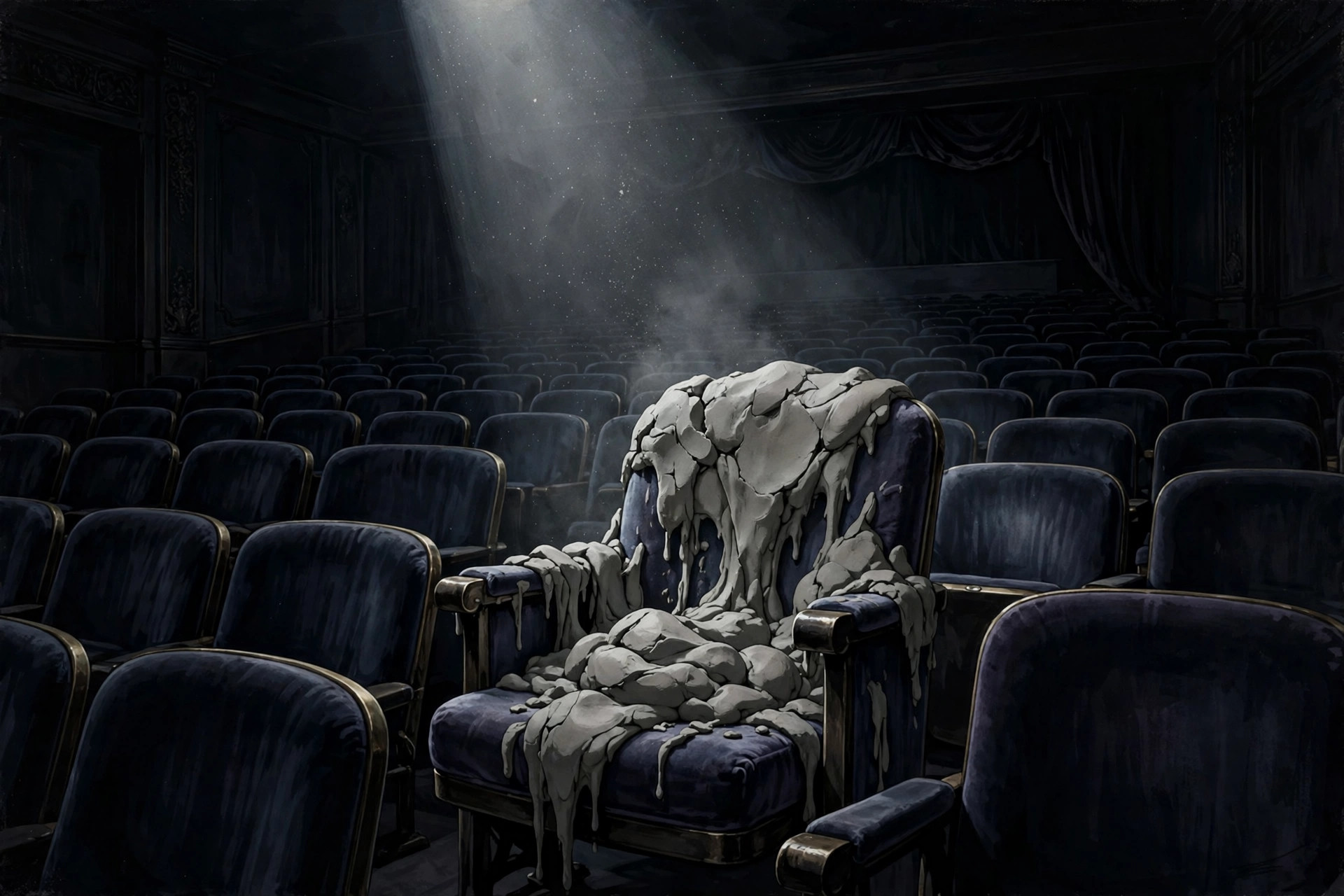
Let me say the quiet part out loud, because the box-office discourse this weekend is doing my head in: if you judge Clayface by superhero-movie standards, it looks like a disaster. If you judge it by the standards of the movie it actually is — an R-rated October horror film that cost a fraction of a superhero tentpole — it looks like something else entirely. It looks like a studio finally learning how to lose less money, and a fandom that has not yet learned how to read the scoreboard.
That is not spin. That is arithmetic. And the arithmetic is the whole story here.
The headline writes itself, and that is the problem
Clayface opened in North American theatres on October 23, 2026. By Saturday morning, October 24, its projected three-day domestic opening had narrowed to between $24 million and $25 million, according to Deadline reporting cited by Screen Rant. That is down from a Friday-morning projection range of $25 million to $35 million. In other words, the projection did not just come in low. It melted, which feels on-brand for a movie about a man whose skin turns to clay, but is not exactly the opening-weekend narrative any studio wants.
Stack that number against the other two films in the new DC Universe and the headline writes itself. Superman opened in 2025 to $125 million domestically and went on to $618.7 million worldwide. Supergirl opened on June 26, 2026 to $37.1 million domestically and finished at $126.4 million worldwide. Clayface, at $24 million to $25 million, would have the lowest domestic debut of the three by more than $10 million. Cue the obituaries. Cue the "is the DCU already dead?" videos. Cue everybody acting like a $25 million opening means the same thing in every context, which it absolutely does not.
Here is the context the headline skips. Superman was a PG-13 tentpole. Supergirl was a PG-13 tentpole that reportedly cost $170 million or more to make. Clayface is an R-rated body-horror movie. It is directed by James Watkins, written by Mike Flanagan and Hossein Amini, and stars Tom Rhys Harries as Matt Hagen, a working actor whose career is derailed when a scientific mishap leaves his skin malleable and claylike, with Naomi Ackie as Dr. Caitlin Bates. It runs 108 minutes. It is, by design, not a four-quadrant blockbuster. An R rating alone shrinks the audience before a single ticket is sold, because a large chunk of the under-17 crowd that shows up for superhero movies simply cannot walk in unaccompanied. Pretending that handicap does not exist and then grading the film on the same curve as Superman is not analysis. It is innumeracy with a comments section.
Judge it against horror movies, because it is one
The honest comparison set is not Superman and Supergirl. It is the R-rated October horror class, and in that class Clayface is not an outlier at all. It is right in the middle of the pack.
Screen Rant's own comparison makes the point better than I could. Smile opened to $22.6 million. Saw X opened to $18.3 million. Smile 2 opened to $23 million. The Exorcist: Believer opened to $26.5 million. Black Phone 2 opened to $27.3 million. A $24 million to $25 million opening for Clayface sits comfortably inside that range — above Smile and Saw X, below Black Phone 2, and basically shoulder to shoulder with Smile 2. Nobody called Smile a franchise-killing catastrophe. Smile became a franchise. The difference is not the number. The difference is the logo on the poster, and the expectations that logo drags in behind it.
And the audience response, at least so far, backs up the horror comparison rather than the superhero one. Screen Rant reports Clayface holding a 76% critics score and a 94% audience score on Rotten Tomatoes. That audience number matters more than the critics number here, because horror lives and dies on word of mouth in week two. A front-loaded superhero opening can collapse 60% in its second weekend and still be fine, because the money was already banked. A horror movie with a 94% audience score has a chance to do the opposite: to hold, to leg out, to become the movie your group chat insists you have to see in a theatre rather than wait for streaming. That is not a guarantee — plenty of well-liked horror movies still drop hard — but it is a much healthier starting position than the "lowest DCU debut" framing suggests.
Thursday previews point the same way. The film took an estimated $3.5 million in Thursday previews, with screenings beginning at 2 p.m., per Deadline reporting cited by The Movie Blog. That is a real number, not a vibes-based one, and it beat the $2 million in previews earned by Kraven the Hunter, another comic-book-adjacent R-rated swing. Again: not a record, not a disaster. A solid, unsexy start for a mid-sized genre movie. The discourse treats "solid and unsexy" as a failure because superhero discourse only has two settings — historic triumph or franchise-ending bomb — and neither one fits a $44 million horror film.
The $44 million is the story. Everything else is noise.
Let us talk about the number that actually decides whether Clayface is a success, because it is the number nobody puts in the headline. Clayface reportedly cost $44 million to produce. Supergirl reportedly cost $170 million or more. Do the division: Clayface cost roughly a quarter of what Supergirl cost. That changes the entire definition of winning.
Screen Rant puts Clayface's estimated break-even point somewhere around $110 million worldwide, and notes that a trajectory similar to Saw X — which earned $112.8 million worldwide on comparable audience scores — could take Clayface as high as roughly $153 million by the end of its run. I am not going to pretend those are certainties; they are projections built on other projections, and horror legs are notoriously hard to predict. But the shape of the argument is right, and the contrast with Supergirl is devastating for anyone who wants to call Clayface the bigger failure. Supergirl grossed $126.4 million worldwide against a $170 million-plus budget. That is a bomb by any honest accounting. If Clayface grosses roughly the same worldwide total against a $44 million budget, it is a profitable movie with a future. Same gross, opposite verdict. That is why budget is not a footnote. Budget is the verdict.
This is the lesson the old DC regime never learned and the new one, maybe, finally has: not every comic-book movie has to be a $200 million bet-the-studio event. Some of them can be $44 million genre movies with a clear identity, a real director, and a premise that actually suits the character. Clayface was never going to be a $125 million opener. He is a Batman villain whose whole deal is body horror and identity loss — a man literally losing his face and his career at the same time. Making that story as an R-rated horror film is not a compromise. It is the correct adaptation choice, and it is the kind of choice that only makes sense if you stop demanding that every DC movie behave like Superman.
Think about what the alternative would have been. A PG-13, $170 million Clayface with the horror sanded off, opening to $37 million and dying at $126 million worldwide, would have been a second Supergirl: a bigger headline, a bigger loss, and another round of "DC is broken" takes. Instead we got a smaller, weirder, cheaper movie that might actually make its money back. If that is failure, then the word has lost all meaning, and the studios should simply stop making mid-budget movies altogether and only release three $250 million films a year until the industry collapses into a smoking crater. Some executives, I suspect, would be fine with that. I am not.
What this does not prove — yet
Now, because I am not here to sell you a victory lap for a movie whose weekend is not even over: there are things this opening does not prove, and I am going to name them instead of burying them.
First, the final weekend total is not in yet. Everything in this piece is a projection as of Saturday morning, October 24 — a $24 million to $25 million range, not a result. If Sunday collapses, or if walk-up business surprises, the story changes, and any writer who treats a Saturday projection as a final gross is lying to you. I will not do that here.
Second, a good audience score is not a sequel order. Screen Rant is careful on this point and so am I: even if Clayface clears its break-even point in theatres, or makes up any shortfall on video on demand, streaming, and physical media, that does not automatically mean it earns a sequel, or that DC will keep making R-rated genre swings. Studios are run by people who panic at headlines, and "lowest DCU debut" is a headline that travels further than a break-even analysis ever will. The right decision and the decision that gets made are not always the same decision. Anybody who has watched DC for the last decade knows that in their bones.
Third, I am not reviewing the movie itself here, and you should not read this as a review. This is a box-office argument, built on reported numbers. Whether Clayface is actually good — whether Watkins and Flanagan stick the body-horror landing, whether Harries carries a role that is basically "man watches himself dissolve" — is a separate question, and it deserves a separate piece after the dust settles. What I can say now is that the numbers give that question room to breathe. A cheap movie that makes its money back gets to be judged as a movie. An expensive movie that loses $100 million gets judged as a crisis. Clayface bought itself the first fate. That is worth something.
The verdict Brooklyn-style
So here is my hot take, and I will plant my flag on it: Clayface is not flopping. It is being misread by people who only know how to read one kind of success. A $24 million to $25 million opening for a $44 million R-rated horror movie with a 94% audience score is a fine start, a plausible path to profit, and — most importantly — proof of concept for the exact kind of movie DC should be making more of: smaller, stranger, cheaper, and actually suited to the character on the poster.
The real test is not this weekend. The real test is the second weekend, and then the one after that, and then what DC does with the lesson. If the studio looks at a profitable little horror movie and concludes "audiences don't want this," it will have learned nothing, and the next $170 million swing will teach it the same lesson again, more expensively. If it looks at the same numbers and concludes "we can make money without betting the farm," then Clayface — the melting man, the guy losing his face — might end up being the most important DC movie of the year. Not the biggest. The most important. There is a difference, and this weekend is the perfect proof of it.
Go see it in a theatre if horror is your thing. Or don't. But stop calling a $44 million movie a bomb because it didn't open like Superman. That is not criticism. That is just bad math with a louder font.