Home / Gaming / Valhalla New Game+
GamingUbisoft Said No to Valhalla's New Game+ in 2022. Yesterday It Arrived Anyway.
There is a special kind of disbelief reserved for the moment a company does the exact thing it once told you, on the record, it would never do. Not a quiet walk-back. Not a "circumstances changed" press release buried on a Friday afternoon. A full free update, with a name that reads like a taunt — The Most Requested Update — landing six years after launch, in a game most of us had already filed away under "finished, fondly remembered, done."
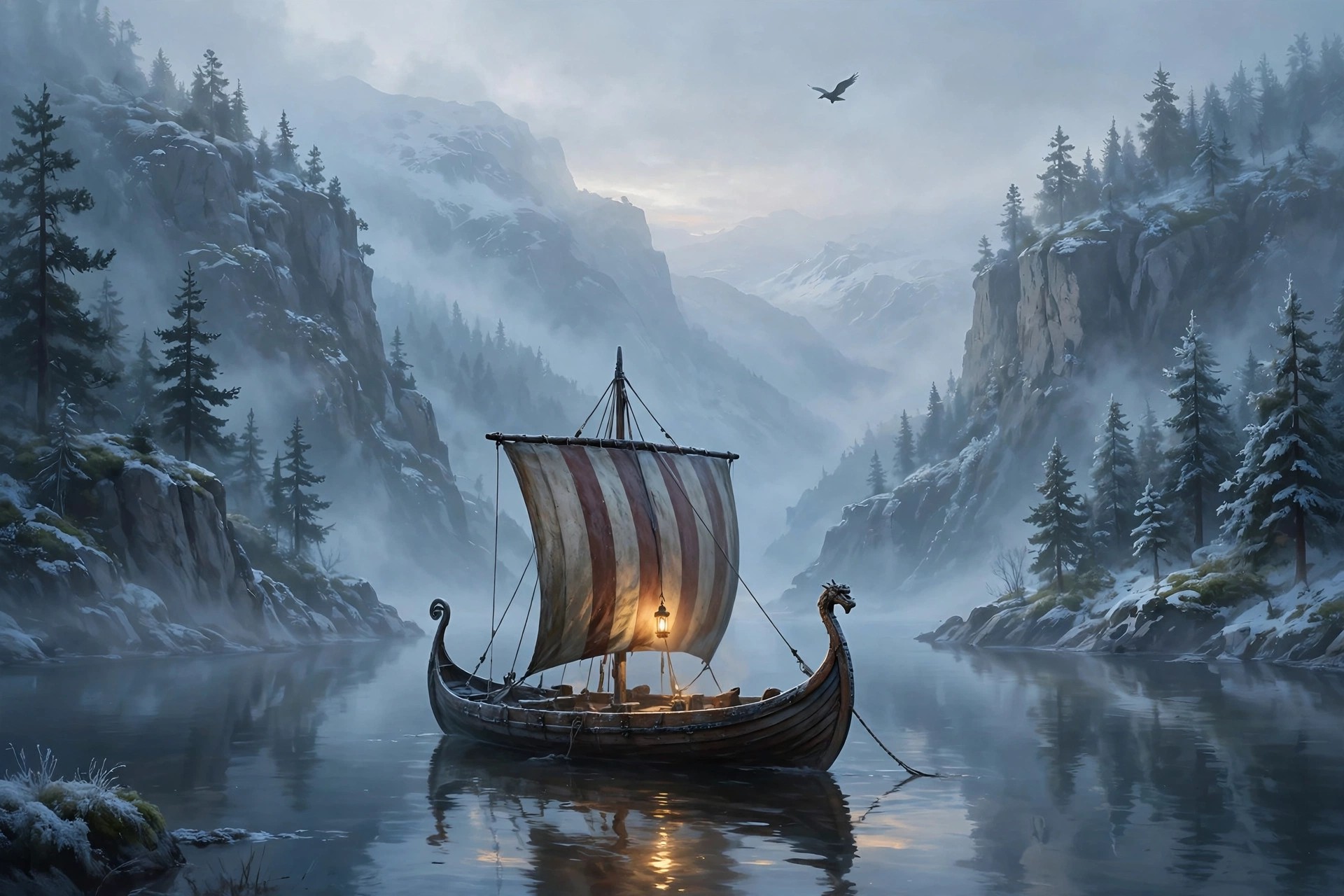
There is a special kind of disbelief reserved for the moment a company does the exact thing it once told you, on the record, it would never do. Not a quiet walk-back. Not a "circumstances changed" press release buried on a Friday afternoon. A full free update, with a name that reads like a taunt — The Most Requested Update — landing six years after launch, in a game most of us had already filed away under "finished, fondly remembered, done."
That is what happened to Assassin's Creed Valhalla on November 5. Title Update 1.8.0 is live now, it is free, and its headline feature is New Game+, the mode Ubisoft said in November 2022 it was not going to add. If you played Valhalla at launch, put a hundred hours into Eivor's England, and then moved on with your life, Ubisoft just knocked on your door and asked if you want to do it all again. The honest answer, after six years, is more complicated than yes or no — and that is exactly why this update is worth talking about.
The no that lasted four years
Let's be clear about the history here, because the history is the story. Valhalla launched on November 10, 2020. Players asked for New Game+ almost immediately, the way players ask for New Game+ in every enormous open-world RPG: they finish the story, they look at their maxed-out gear and their favorite build, and they want a reason to use it again against something that can actually fight back. Ubisoft's answer, delivered in November 2022, was no. The game's structure, the studio argued, made it difficult to create a sufficiently rewarding replay experience. That was the final word. The game got its last big expansion, Dawn of Ragnarök, and the conversation moved on to the next Assassin's Creed, and then the one after that.
Four years later, on October 29, 2026, Ubisoft announced the reversal as part of its Fall 2026 Assassin's Creed franchise update. New Game+ would arrive on November 5, alongside news that Valhalla had passed 40 million players. Read that number again: 40 million. That is not a game that needs saving. That is a game with an audience so large that a free update for it is still, in 2026, a commercially rational thing to do. Ubisoft did not resurrect Valhalla out of nostalgia. It did it because 40 million players is a market, and a market that big does not go quiet just because the credits rolled.
So let's not pretend this is charity. It is good business, and it is also, to Ubisoft's credit, a genuinely good update. Those two things can be true at the same time, and the people who pretend otherwise are usually the ones who have never had to decide whether to spend money supporting a six-year-old game.
What actually arrived
The update is not a token gesture. New Game+ unlocks once you complete the Holy Day quest, the final quest of the Hamtunscire region — you do not have to finish absolutely everything in the campaign, which is a mercy, because "finish everything in Valhalla" is a sentence that should come with a calendar warning. Each further New Game+ run scales the difficulty up, so your overpowered endgame Eivor does not just stroll through England flattening bandits like a tourist.
The clever part is Mithril. In New Game+, every piece of gear or book of knowledge you have already collected converts into Mithril instead, a new resource that feeds the new upgrade ceiling. Divine Gear can now be upgraded from level 13 all the way to 27. That is a real reason to replay, not just a permission slip: your second run is not a rerun of the first with bigger numbers, it is a different progression curve with a different economy. Looting Carbon, Nickel, and Tungsten from Wealth Chests gives Platinum instead, and Mithril can also be found in Niflheim and in the Mastery and River Raid shops.
Then there is the rest of the package, which is where you can tell this was built by people who actually listened to the complaints. Over 300 new engravable runes have been added, the Rune Forge has been overhauled so runes can be upgraded to a new Superior tier — and upgraded for silver, from the menu, which is the kind of small quality-of-life change that matters more than any trailer bullet point. Extended Progression Mode is optional, and when it is active, your gear, runes, and masteries all contribute to your overall Power level, which smooths out the game's famously lumpy power curve. Ravensthorpe finally gets a Stash, a place to store gear and runes instead of drowning in an inventory that has been mocking you since 2020. There are two new achievements — Ivaldi's Heir, for fully upgrading Divine Gear, and Circle of Renewal, for finishing a New Game+ run — plus a free Master Assassin outfit inspired by Naoe from Assassin's Creed Shadows, PSSR 2 support for PlayStation 5 Pro, and a weapon balance rework that touches dual wielding.
That is a lot of update for a game that, by every normal rule of this industry, should have been left alone years ago. And that is the point. The Most Requested Update is not a cute name. It is a description of a process: players asked, the studio said no, the players kept asking, and eventually the studio came back with the thing itself, plus a stash.
The uncomfortable question: why now?
Here is where I have to be the annoying one, because somebody has to be. If New Game+ was impossible in 2022 because of Valhalla's structure, what changed? The structure did not change. The code did not rewrite itself. What changed is the context around the code — and the context is worth naming, because it tells you something about where Ubisoft is right now.
The studio said earlier this year that it is betting on Assassin's Creed, after the success of its recent releases, and Valhalla is still the biggest Assassin's Creed ever by player count. Forty million players is a number no publisher walks away from while it still has a live audience. A free update that pulls even a fraction of those players back into the game, back into the store, back into talking about the franchise, is worth more than a dozen marketing campaigns. New Game+ is also, conveniently, the cheapest kind of new content: no new map, no new story, just new systems wrapped around a world that already exists. The reversal is not a mystery. It is arithmetic.
Does that make it cynical? No. It makes it normal. The games industry runs on arithmetic, and the arithmetic here happens to produce something players genuinely wanted. The problem is not that Ubisoft's motives are commercial. The problem would be if the update were bad, and it is not — on paper, at least. I have not played it yet. Nobody outside the review and creator pipeline has had it for more than a day. The Rune Forge changes and the Extended Progression Mode sound right, but "sounds right" is not "plays right," and Valhalla's history has enough rough edges — the bloated middle, the power curve that made half the map trivial, the inventory that fought you — that I am not handing out a verdict before I have sailed back into England myself.
What this means for the rest of the series
The bigger question is what this reversal means for Assassin's Creed going forward, and here I am going to plant a flag: if New Game+ can arrive in Valhalla six years late, after an explicit no, then "no" is no longer a meaningful answer from Ubisoft about anything. That is good news for players and slightly awkward news for the studio, because every future "we have no plans" will now be read as "we have no plans yet." Shadows players who want a New Game+ mode will point at this update. The next game's community will point at it too. Ubisoft has, with one good update, raised the price of every future refusal.
There is also a lesson here for the rest of the industry, and it is a simple one: old games do not die anymore. They sit there, installed on tens of millions of machines, one good update away from being the conversation again. The live-service era taught publishers to keep feeding the games that make money today. Valhalla's update suggests a second lesson, quieter but just as important: a game with 40 million players is never really finished, because the audience never really leaves. They just wait. And sometimes, after four years of waiting, the thing they asked for shows up anyway, free, with a new resource and a stash and a Naoe outfit.
So should you go back?
If you never finished Valhalla, this changes nothing for you — go finish it first, and take your time, because the game is long and the middle sags and nobody is going to grade you on speed. If you finished it and loved it, the answer is yes, with one condition: start the new run for the systems, not for the story. The story is the same story. The joy here is in the build — the runes, the Divine Gear climb to 27, the difficulty that finally scales to meet the character you spent a hundred hours building. That is what New Game+ is actually for, in every game that does it well: not reliving the plot, but finally using the toy you built.
And if you finished Valhalla and never thought about it again, that is fine too. Six years is a long time. Games pile up, backlogs grow, and nobody owes a Viking saga a second voyage. But know this: the door is open, it is free, and it will still be open next month, and the month after that. Ubisoft took four years to change its mind. It is not going to change it back.
That, more than any single feature in the patch notes, is the real news. A studio said no, the players kept asking, and the studio came back. In an industry where "no" usually means "never" and "never" usually means "buy the sequel," that is worth a headline all by itself.