Home / Gaming / Elder Scrolls VI Sentinel
GamingBethesda Finally Named Elder Scrolls VI — and the Name Is the Whole Announcement
Eight years. That is how long Bethesda made us wait for a single word.
Eight years. That is how long Bethesda made us wait for a single word.
Not a trailer with combat. Not a release window you could circle on a calendar. Not even a list of consoles. One word, tucked into the end of a video celebrating 40 years of Bethesda Game Studios, and the entire games internet acted like somebody had dropped a new Skyrim. I get it. I was right there refreshing with everybody else. But let us be honest about what happened on November 3, 2026, because the honest version is more interesting than the hype version: Bethesda finally gave its most famous unfinished game a name, and the name is doing an enormous amount of work for a game that still will not show itself.
The game is called The Elder Scrolls VI: Sentinel. That is now official, not a leak, not a forum guess, not a trademark filing somebody squinted at. Todd Howard revealed it in the studio's 40th anniversary video, saying it felt like the perfect time to tell players what the game is actually called. Xbox chief Asha Sharma congratulated Bethesda on the announcement the same day. So yes, the drought is over in one very specific sense. We have a title and a logo. Everything else is still a blank page with a very expensive header on it.
What Bethesda actually showed us
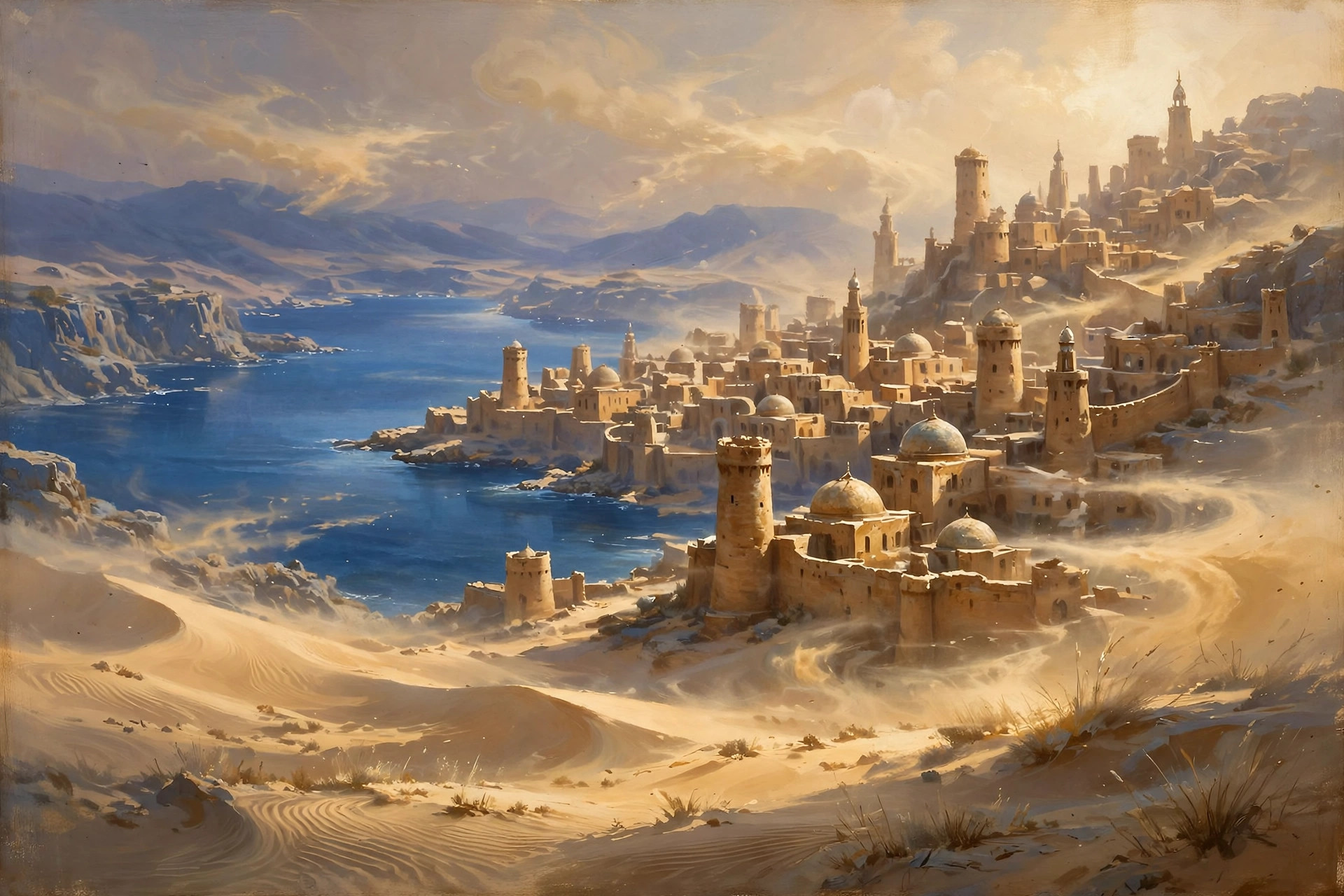
Almost nothing, and I mean that as a description, not an insult. The reveal was a short teaser, not a gameplay presentation. There were sweeping shots, sand, a jeweled handle, a logo, and a quote. That quote is worth reading in full, because it is the only piece of new fiction Bethesda handed us:
"The scroll offered only a shimmer, a veil thinly lifted to my eyes. A future lost. A victory undone. Sands of time scattered by fate." It is attributed to Yazar, Moth Priest to High Queen Iradne of Hammerfell (4E 206).
Then the kicker, in Bethesda's own framing: "Your next journey to Tamriel will be in The Elder Scrolls VI: Sentinel."
That is the whole announcement. Read it again and notice what is not there. No hero. No villain. No combat system, no dialogue wheel, no map, no skill tree, no dragon, no release year. The date in the quote, 4E 206, places the fiction five years after Skyrim's 4E 201 setting, according to coverage of the teaser. That is a crumb, and Elder Scrolls fans will chew on a crumb for months, because we have been trained to. But a date in a quote is not a story. It is a hint that a story exists somewhere, behind a door Bethesda is not opening yet.
Bethesda said so itself, in its own post about the reveal: development continues, and it will be some time before the studio is ready to share more. That sentence matters more than the logo. It is Bethesda telling you, in plain language, not to expect a gameplay blowout next week. File that away before you start building a release-date countdown in your head.
Why "Sentinel" is a better clue than it looks
Here is where I will give Bethesda real credit, because the choice of name is not random, and it is not just a cool-sounding word. Sentinel is a city in Hammerfell, the province of the Redguards on the northwest coast of Tamriel, beside Iliac Bay. The teaser names Hammerfell directly, through High Queen Iradne. Put those two facts together and the setting stops being a rumor. The next Elder Scrolls game is going to Hammerfell. That is the one concrete, checkable thing this reveal actually settled, and for a series where the province is the personality, it is a big thing.
Think about what that means, not in lore-wiki terms but in what-you-will-actually-play terms. Skyrim was snow, mountains, and Nords shouting at dragons. Morrowind was alien mushrooms and ash. Oblivion was green Cyrodiil and a capital city you could get lost in. A Hammerfell game should feel nothing like Skyrim, and that is the point. Deserts, a major port city, trade routes, a coastline, a culture built around swordsmanship and survival in harsh country — that is a different palette, a different pace, a different kind of exploration. If Bethesda gets the sense of place right, Sentinel could feel like a genuine break from the last fifteen years of snow and dragons, instead of Skyrim with a tan.
But — and this is the Brooklyn skeptic in me talking — a setting is not a game. Hammerfell has existed in Elder Scrolls lore for decades. Fans have been writing wish lists about it since before some of today's players were born. Naming the game after its most famous city is a promise, and promises are cheap until there is a playable world attached. The teaser gave us sand and a handle. It did not give us a single street in Sentinel, a single non-player character, a single quest, or a single reason to believe the city will feel alive rather than pretty. Pretty is the easy part. Alive is the hard part, and it is the part Bethesda has not demonstrated yet for this game.
The 2018 problem has not gone away
To understand why a one-word reveal landed like an earthquake, you have to remember the original sin here. Bethesda announced The Elder Scrolls VI in 2018 with a brief landscape teaser. Then it went quiet for eight years. Not quiet like "we showed a little at E3." Quiet like a studio that had announced a game and then spent the better part of a decade making other games while everybody waited.
Howard himself has acknowledged how absurd that wait became. He told IGN in March that players should, in effect, pretend the game had not been announced. That is a remarkable thing for a studio head to say about his own flagship, and it tells you everything about how Bethesda now views that 2018 reveal: too early, too empty, a trailer for a game that was nowhere near ready to be talked about.
So why reveal a name now, in a video that still shows no gameplay? The generous reading is that Bethesda wanted to mark its 40th anniversary with something real for its longest-waiting fans, and a name plus a setting is the most it could honestly offer. The less generous reading is that a name reveal is the perfect low-cost hype event: it dominates a news cycle, it costs no gameplay footage, and it commits the studio to nothing about when the game ships or what it plays like. Both readings can be true at the same time. A studio can genuinely want to celebrate with its fans and also know exactly how much free attention a single word will buy.
I lean toward the generous reading, but only slightly, and only because of the tone. Howard did not dress this up as more than it was. He did not call it a reveal trailer for a game coming soon. He framed it as a name, for a moment, for a studio turning 40. That restraint is new for this project, and I will take restraint over another empty landscape shot any day. But restraint is not delivery. The clock that started in 2018 is still running, and a name does not stop it.
How far away is this game, really?
Here is the part where you need to separate what Bethesda said from what other people reported, because the internet has already blurred them together. Bethesda announced no release date and no release window. None. If you see a 2028 date attached to Sentinel this week, that is not Bethesda talking. That is reporting.
Bloomberg's Jason Schreier, who has been right about this game's timeline before, said the game is still more than two years away. Gadgets 360 and other outlets carried that reporting alongside the title announcement. Two-plus years from November 2026 points to 2028 at the earliest, and that is a floor, not a promise. Games of this size slip. Bethesda games of this size slip in ways that become their own news cycle. So when I say "more than two years away," hear it the way Schreier meant it: a warning against expecting this game soon, not a date you can plan a console purchase around.
The platform question is just as unsettled, and I am not going to pretend otherwise. Bethesda has not announced a platform list for Sentinel. IGN has previously reported whispers inside Microsoft that the game has not been developed with Sony in mind, and that reporting is now being recycled everywhere as if it were an announcement. It is not. Microsoft owns Bethesda — Xbox acquired the studio in 2021 — and Sharma has renewed a focus on console exclusives, according to coverage of the reveal. Those facts make an Xbox-and-PC expectation reasonable. They do not make a PlayStation exclusion official. Until Bethesda or Xbox says the words, the platform list is an open question, and anybody selling you certainty on it this week is selling you a rumor with better packaging.
That uncertainty is exactly why I am not telling you to buy anything, pre-order anything, or upgrade anything for Sentinel. There is nothing to pre-order. There is no edition to argue about. There is a name, a logo, and a quote from a fictional priest. That is a fine thing to be excited about. It is a terrible thing to spend money on.
What I actually want from Sentinel
Since Bethesda has given us almost nothing to review, the useful question is not "is this game good" — nobody knows — but "what would make it good, and what should worry us." So here is my list, from a guy who has spent too much of his life in Tamriel and is not going to pretend otherwise.
First, make Sentinel a city, not a backdrop. The game is named after a place. That place has to be more than a fast-travel point with nice walls. I want districts that feel different from each other, a port that actually trades, streets where the desert and the sea meet in ways you can feel when you walk them. If the biggest city in the game feels like a theme park with good lighting, the name will become a joke within a week of launch.
Second, let Hammerfell be Hammerfell. The Redguards have one of the richest histories in this series, built around sword-singing, desert survival, and a relationship with the sea that most fantasy games never bother with. A Hammerfell game that plays like Skyrim with different weather would be a failure of imagination. A Hammerfell game that builds its quests, its combat feel, and its exploration around its own culture would be the first Elder Scrolls game in a long time that feels like it had to be set where it is set.
Third, do not repeat the Starfield mistake of scale over density. I am not here to relitigate that whole game, but the lesson is obvious and it applies directly: a bigger map is not a better game if the places in it feel interchangeable. Sentinel's promise is specificity — one city, one coast, one desert province. Bethesda should protect that specificity instead of diluting it across a map so large that nothing in it is memorable.
And fourth, the boring one that matters most: show gameplay before you ask for trust. Bethesda has now asked for trust twice on this game — once in 2018, once this week — and both times it offered almost nothing playable in return. The next time this game appears, it should appear as a game. Not a logo. Not a landscape. A character moving through a place, doing something only this game lets you do. Until then, every article about Sentinel, including this one, is an article about a name.
The verdict, for now
So where does that leave us? With a real announcement that is also, deliberately, almost no announcement at all. The Elder Scrolls VI is called Sentinel. It is going to Hammerfell. It is still more than two years away, according to the best reporting we have, and Bethesda has not told us when it will show more, what it will play like, or where you will be able to play it.
Is that disappointing? A little. Is it also the most honest thing Bethesda has done with this game since 2018? Yes, and that is why I am not mad about it. After eight years of silence, a studio that says "here is the name, here is the place, and it will be some time before we share more" is at least telling the truth about where things stand. The hype machine will do what it always does — it will turn one word into a hundred speculation videos, a thousand forum threads, and at least one fake release date that your cousin will swear he saw on a reputable site. Ignore all of that. Keep the three facts that are actually confirmed, and wait for the fourth fact, which is the only one that will ever really matter: the gameplay.
When Bethesda is ready to show Sentinel as a game and not a word, I will be first in line to argue about it, loudly, from Brooklyn, like I always do. Until then, we have a name. It is a good name. It points to a great setting. And it is not, by itself, a game. Anybody who tells you otherwise is selling you sand in the desert — and Hammerfell, of all places, should know better than that.