Home / Culture / Endless Delay
Culture · EssayThe Age of the Endless Delay: GTA 6, Silksong, and the Patience We've All Lost
Waiting has become a concrete, years-long condition rather than a brief anticipation — and it quietly teaches fans they can live without the thing they wanted.
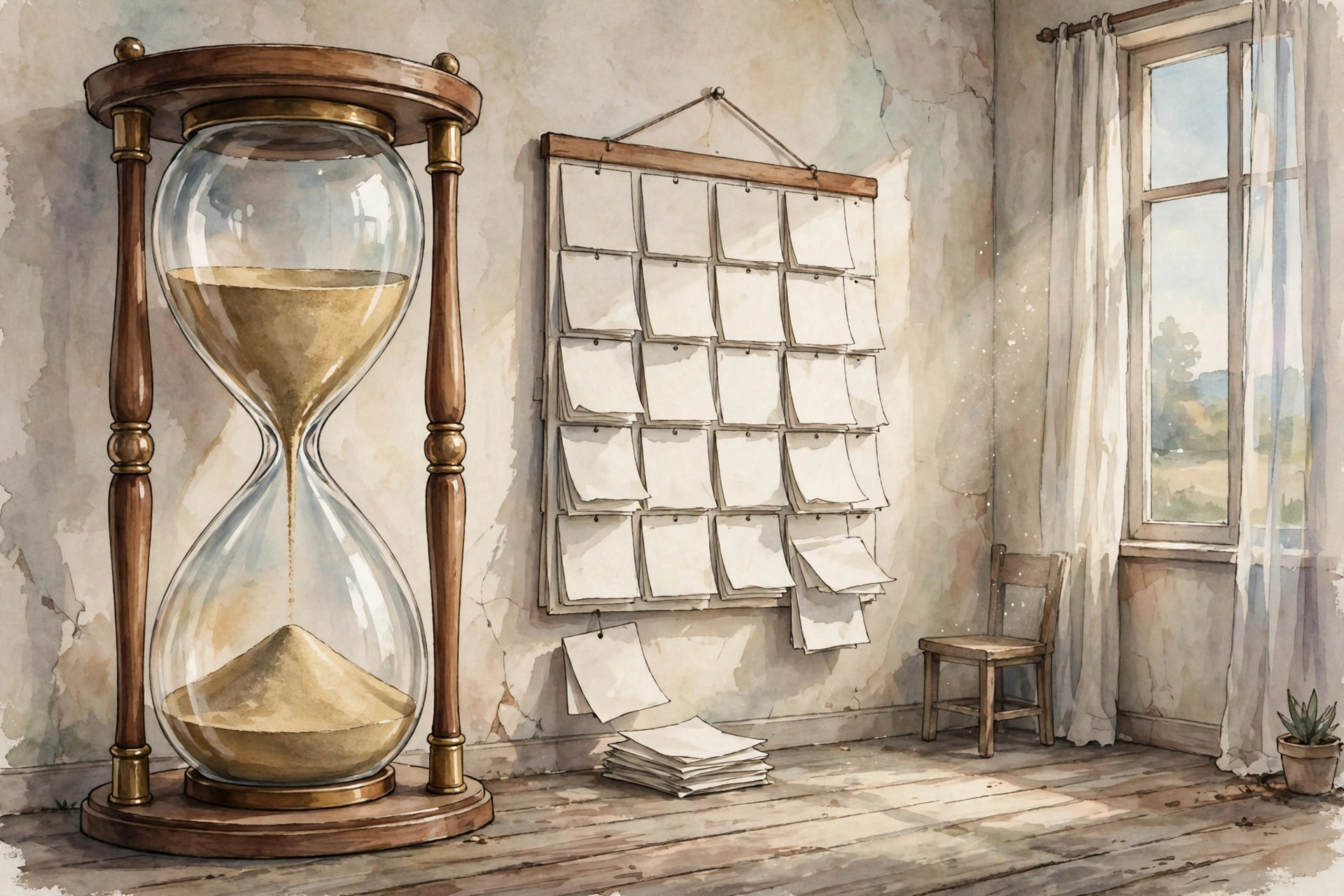
The strangest part of waiting for a game for six years is not the waiting itself. It is the way the waiting rewrites your memory of wanting it. At first the desire is sharp and specific: you have seen a trailer, or read an announcement, and you can picture the kind of evenings you will spend with this game. A year later the picture is blurrier. Two years later you are no longer imagining the game so much as imagining yourself finally being done with waiting for it. By year six, the game has become less a thing you want to play and more a debt you feel owed. That shift, from anticipation to entitlement, is where most of the damage happens, because no actual game, however excellent, can repay six years of accumulated expectation.
It helps to be honest about why announcements now come so early. An announcement is no longer just information. It is a claim on attention in a market where attention is the scarcest resource. A studio that announces a game years in advance is not only telling fans that something exists. It is planting a flag in their mental calendar, ensuring that every future conversation about the genre, the platform, or the studio passes through that unreleased title. That strategy works, in the narrow sense that it keeps the title alive, but it has a cost that does not show up on a marketing spreadsheet. It converts fans into custodians of an unfinished promise, and custodians eventually get tired.
Leaks make that fatigue worse in a specific way. A trailer is a promise made by the people who are actually making the game, framed the way they want it framed. A leak is a promise made by nobody, framed by speculation, and yet it feels more real because it feels stolen and therefore true. Fans study leaked footage frame by frame, not because they enjoy detective work, but because they are trying to close the gap between knowing something exists and being able to touch it. The result is a fanbase that arrives at launch already exhausted by analysis. They have already argued about systems they have not played, ranked features they have not used, and mourned cuts that may never have existed.
Waiting changes the game you think you are waiting for
One of the least discussed effects of a long wait is that the audience changes while the game stays unfinished. The person who was excited in the announcement year is not quite the same person six years later. Their tastes have shifted, their free time has shrunk or grown, their friends have moved on to other games, and the genre itself has moved. A sequel announced into one cultural moment can therefore arrive in a different one, carrying expectations formed by an earlier version of both the player and the medium. That mismatch is nobody's fault, exactly, but it explains why a long-delayed game can feel oddly out of step even when it is well made.
There is also a social cost that deserves more attention. Waiting together used to be a communal pleasure: a shared countdown, a midnight launch, a group of friends all starting the same game on the same weekend. Endless waiting fractures that community. Some fans stay obsessed, refreshing news daily. Others drift away and return only when the release finally happens, if they return at all. Others become professional sceptics, performing indifference as a defence against disappointment. By launch day, the fanbase is no longer a single audience. It is several audiences, each with a different relationship to the wait, and each judging the game by a different standard.
The comparison to film and television is instructive because it shows that this is not a gaming problem alone. It is an entertainment-economy problem. When a franchise can sustain attention for a decade without delivering its final instalment, or when a prestige show can disappear for years between seasons, waiting itself becomes a product. There are podcasts about waiting, videos about waiting, articles about waiting, and entire social feeds devoted to tracking delays. That secondary economy is not inherently cynical, and much of it is made by fans rather than by studios, but it does mean that delay is no longer merely an absence. It is an activity with its own rewards, and activities that reward people tend to persist.
The cynical read, and its limits
It is tempting to treat all of this as a conspiracy, as if studios deliberately stretch development to monetise anticipation. That simplification should be resisted. Making a large modern game is genuinely difficult, and the standards for polish, scale, and technical performance have risen faster than the tools for meeting them. Teams grow, scopes expand, and a project that seemed manageable in its early years can become unwieldy as new expectations accumulate. Delay, in many cases, is not a strategy. It is a symptom of ambition colliding with reality, and the people most frustrated by the delay are often the people making the game.
At the same time, it would be naive to pretend that incentives play no role at all. A company that continues to earn money from an existing title while its sequel remains unreleased faces a different set of pressures from a company with nothing to sell. A marketing department that can dominate conversation with a single trailer faces a different temptation from one that must constantly produce new material. These incentives do not need to be stated in a meeting to influence decisions at the margins. A release window can slip a little because nobody is forced to choose. A feature can be added because there is time, and then more time is needed because a feature was added. Good intentions and structural incentives can produce the same outcome: a longer wait.
What the personal coping strategy gets right is that it treats attention as a finite resource rather than as a moral failing. Stopping paying attention to games until they are close to release is not snobbery, and it is not a claim to superior taste. It is a practical recognition that hype-hours are real hours, and that those hours could be spent playing something that already exists. The games and shows that already exist matter here not as recommendations but as evidence: the present tense of entertainment is already crowded with excellent work. The future does not need to be awaited in order for the present to be enjoyable, and the longer we treat unreleased games as the main event, the more we neglect the event that is already happening.
The deeper question is whether audiences can relearn a different relationship to anticipation. A healthier model might look less like a countdown and more like a surprise: studios saying less, showing later, and letting a game arrive when it can actually be played. That would require studios to give up the attention benefits of early announcement, and it would require fans to accept less advance knowledge in exchange for a cleaner first encounter. Neither side has much incentive to move first. But the current model is visibly wearing people out, and worn-out fans are not a sustainable audience. At some point, the industry will have to decide whether it wants fans who are excited, or fans who are merely still waiting.